
RonixSci is a forward-thinking academic and scientific publishing house based in the United Kingdom, dedicated to advancing knowledge across the frontiers of science, engineering, and technology. Founded with a vision to bridge the gap between cutting-edge research and real-world application, RonixSci serves as a dynamic platform for scholars, researchers, and innovators to share their insights with a global audience.
At the heart of RonixSci lies a commitment to:
- Scientific Rigor: Upholding the highest standards of peer review and editorial integrity to ensure the publication of robust, impactful research.
- Global Collaboration: Fostering an inclusive and diverse scholarly community that transcends borders and disciplines.
- Innovation & Accessibility: Leveraging modern digital tools to make scientific knowledge more accessible, discoverable, and actionable for academics, professionals, and the public alike.
- Interdisciplinary Focus: With a special emphasis on emerging fields such as artificial intelligence, photonics, electronics, and financial modeling, RonixSci champions research that drives innovation and societal progress.
Whether through open-access journals, conference proceedings, or collaborative editorial initiatives, RonixSci is poised to become a trusted name in the global research ecosystem—where clarity meets curiosity, and science meets impact.
Journals
-
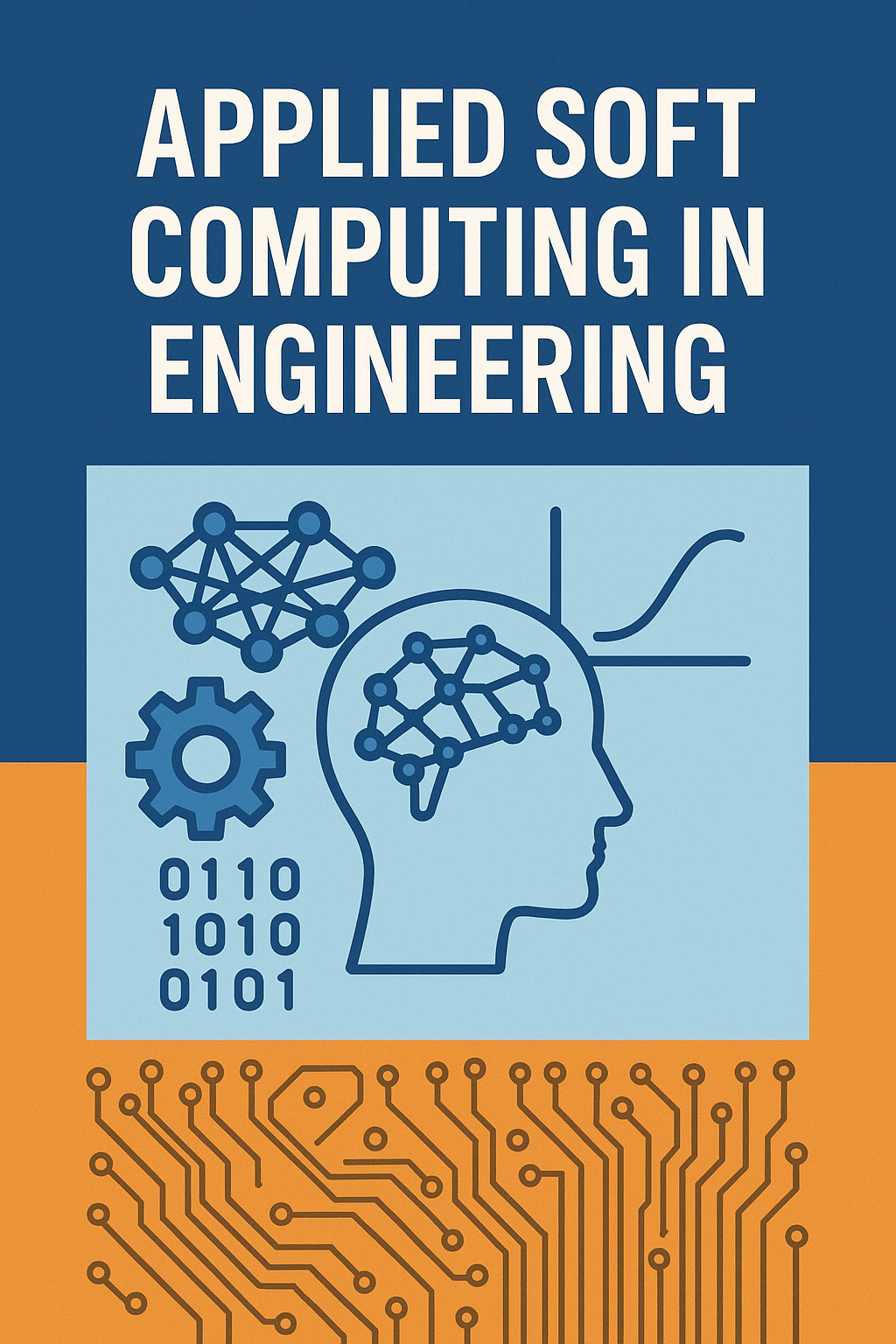
Applied Soft Computing in Engineering
Frequency: Semiannual
Print ISSN: 1234-1234
Online ISSN: 1234-1234
Applied Soft Computing in Engineering (ASCE) is a peer-reviewed, interdisciplinary journal dedicated to the advancement and application of soft computing methodologies across engineering domains. The journal serves as a platform for researchers, practitioners, and innovators to explore intelligent systems that address real-world engineering challenges through techniques such as fuzzy logic, neural networks, evolutionary algorithms, probabilistic reasoning, and hybrid models.
ASCE emphasizes practical implementations, algorithmic innovations, and system-level integrations that push the boundaries of adaptive, resilient, and efficient engineering solutions. Topics include—but are not limited to—smart sensing, control systems, optimization in design and manufacturing, fault diagnosis, robotics, energy systems, and AI-enhanced modeling in civil, mechanical, electrical, and biomedical engineering.
Whether through novel architectures, comparative studies, or industrial case applications, ASCE fosters a community committed to bridging theory and practice in soft computing for engineering impact.
-
Journal of Applied Mechanical Systems and Innovation
Frequency: Semiannual
Print ISSN: 1234-1234
Online ISSN: 1234-1234
Applied Mechanical Systems and Innovation is a peer-reviewed academic journal dedicated to advancing the frontiers of mechanical engineering through interdisciplinary innovation, intelligent systems, and applied research. Founded to serve as a dynamic platform for engineers, researchers, and technologists, the journal emphasizes practical solutions, system-level integration, and emerging technologies that shape the future of mechanical systems.
Scope and Focus
The journal welcomes original research, technical reviews, and case studies in areas such as:
- Mechanical system design and optimization
- Smart materials and adaptive structures
- Mechatronics and robotics
- AI-driven control systems and automation
- Photonic and radar-based mechanical applications
- Sustainable and energy-efficient mechanical innovations
Mission
To foster collaboration across engineering disciplines and promote the translation of theoretical insights into real-world mechanical solutions. The journal aims to bridge gaps between academia, industry, and innovation hubs by publishing high-impact, accessible research.
Audience
- Mechanical and systems engineers
- Applied physicists and AI researchers
- Innovators in photonics, radar, and intelligent infrastructure
- Graduate students and educators in engineering and technology
Editorial Vision
Led by a technically advanced editorial team, Applied Mechanical Systems and Innovation prioritizes clarity, rigor, and relevance. It encourages submissions that demonstrate:
- Interdisciplinary thinking
- Scalable engineering solutions
- Integration of AI, electronics, and mechanical design